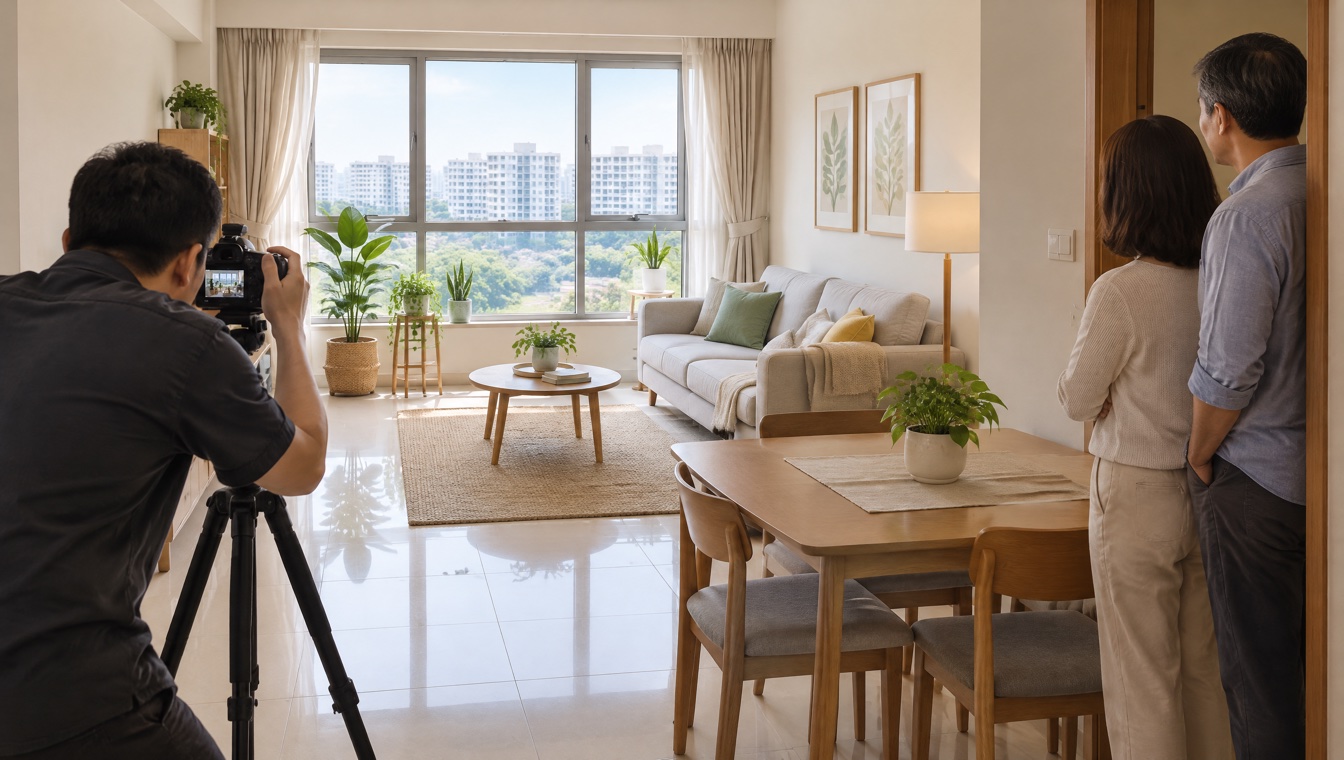
A quick sale and a good price need the same thing: the right buyers see your home early, at a price that looks fair to them. Most of that is decided before the listing goes up.
When I sold my own homes, two things mattered more than anything else: the price and the upkeep. The price is what gets buyers interested. The upkeep is what gets them to decide to buy.
Setting the asking price
Buyers who have searched for months know the market well. They know what similar homes in your block or estate sold for recently. A price far above those sales gets scrolled past.
A listing that sits unsold also tells buyers something. They start to ask what is wrong with it. Then they offer less.
We set the price from three things:
- recent sales in your development or estate, from URA for private homes and HDB resale data for flats;
- what sets your unit apart from those sales: floor, facing, view, layout, renovation and remaining lease;
- what is listed right now, because that is your competition.
The aim is a price a buyer can defend to their bank, their spouse and their parents. That buyer moves quickly.
Who is likely to buy your home
A three-bedroom near a good primary school draws young families. A smaller unit near the MRT draws couples, singles and investors. A ground-floor flat may suit an older buyer who wants fewer lifts and stairs.
Decide who your likely buyer is before writing a word or taking a photo. A family wants to see the bedrooms and the walk to school. An investor wants to know how easily it rents.
Upkeep and repairs before viewings
At a viewing, buyers are working out what they will have to fix after moving in. Water marks on the ceiling, a rusty window frame or an aircon that rattles all add to that list. The longer the list, the lower the offer, or no offer at all. A well-kept home tells them there are no repair bills waiting.
- Fix what a buyer will notice. Stained grout, a dripping tap, a broken cabinet door, a patch of peeling paint.
- Service the aircon and keep the receipts. Records of servicing and repairs show the home was looked after.
- Know the age of the big items. Buyers ask when the aircon, water heater and kitchen were last replaced. Have the answer ready.
Get the home ready before anyone photographs it
Buyers judge a home in the first few photos.
- Clear it out. Pack away most of what sits on counters, shelves and floors. Less furniture makes rooms look bigger.
- Let the light in. Open the curtains and replace dead bulbs. Shoot in daylight.
- Make it neutral. Put away family photos and strong colours, so buyers can picture themselves living there.
If the home is tenanted, agree viewing times and photo day with your tenant early. An unhappy tenant can make viewings hard and put buyers off.
Photos, video and the floor plan
Photos. Use wide, level, bright shots of every room, taken by a professional photographer. Lead with the best room, not the front door.
A walkthrough video. In our own look at Singapore property videos last month, simple walkthroughs of HDB resale flats drew more viewers than people talking to the camera. A steady walk from the door through every room lets a buyer feel the size and the flow before they visit. It also screens out buyers the layout does not suit, so your viewings are with serious people.
The floor plan. Many buyers shortlist on the plan before they look at photos. Show it clearly, with room sizes where you have them. If your layout is efficient, with little wasted corridor space and regular rooms, say so in the listing.
The view and the surroundings. A short clip from the window, the pool or the walk to the MRT shows buyers the surroundings.
The words on the listing
Lead with what the buyer gets, in plain terms. For example: the facing, the floor, the layout, the walk to the MRT, the nearby schools. Check each fact yourself on OneMap or MOE's SchoolFinder before you write it.
Leave out what a buyer cannot check, like "best unit in the estate". Say exactly what was renovated and when. A buyer who finds the listing accurate at the viewing trusts the rest of what you tell them.
Where the home is shown
Buyers who are already searching see every new listing. So the photos, video and floor plan all go up on the first day.
- The property portals. Where most buyers search. This is where the full photos, video and floor plan go.
- Short videos on social media. The walkthrough, cut short for Instagram, TikTok and YouTube. This reaches buyers who are not yet searching the portals.
- Ads aimed at likely buyers. For example, people living in the estate or nearby, or families looking in that school area.
- Other agents. Many buyers come through their own agent. We share the listing with agents whose buyers fit, so it reaches them too.
Viewings
Group the viewings into set windows, such as a weekday evening and a weekend afternoon. You keep your week free, and buyers see that others are interested too.
Have the answers ready. Buyers ask about the maintenance fee, the age of the renovation, any defects, and when you can move out. A vague answer makes a buyer hesitate.
Handling offers
The highest offer is not always the best one. Check three things behind it:
- Financing. Does the buyer have an approval in principle from a bank, or an HDB Flat Eligibility letter for a flat?
- Timing. Does their completion date work with your next home?
- Conditions. Are they asking for repairs, fittings or an extension of stay?
Turning down a fair early offer to hold out for more can leave you with less, months later. We look at every offer with you against the recent sales, so you decide on evidence.
Check these before you list
Some rules decide when you can sell, and what it costs. Check them before you spend on marketing.
HDB flats. You must meet the Minimum Occupation Period first. HDB also asks you to register an Intent to Sell. HDB states that you may grant an Option to Purchase only "at least 7 days after registering the Intent to Sell". Register it while you prepare the home, so the wait costs nothing. Our HDB MOP checklist has the full steps.
Private homes bought recently. Seller's Stamp Duty (SSD) may apply. The rate depends on when you bought and how long you have held the home. IRAS counts the sale date as the day your buyer accepts the Option to Purchase.
| Holding period | Bought 11 Mar 2017 to 3 Jul 2025 | Bought on or after 4 Jul 2025 |
|---|---|---|
| Up to 1 year | 12% | 16% |
| More than 1 year, up to 2 years | 8% | 12% |
| More than 2 years, up to 3 years | 4% | 8% |
| More than 3 years, up to 4 years | No SSD | 4% |
| More than 4 years | No SSD | No SSD |
If your home is close to the end of its SSD period, it can be worth preparing now and listing later.
Your next home. Decide whether you sell first or buy first before you list. Our guide to selling the HDB first or buying the condo first walks through both orders.
Common questions
How do I sell my home quickly without dropping the price?
Price it from recent sales, prepare it before the photos, and launch the full listing on day one. Buyers already searching see every new listing, so it should be complete when they first see it.
Should I price high and leave room to negotiate?
Leave only a little room. A price well above recent sales gets fewer viewings, and a listing that sits unsold draws lower offers later.
Is a video worth it for an HDB flat?
Yes. A walkthrough lets buyers judge the size and layout before they visit. That brings more serious buyers to the viewings.
Selling your home with us
Tell us about your home and when you would like to move. We will look at the recent sales with you, work out who is likely to buy it, and plan how to market it.
Rules checked on 14 Nov 2026 with HDB and IRAS. Rules can change; HDB is the authority on your flat's eligibility to sell.