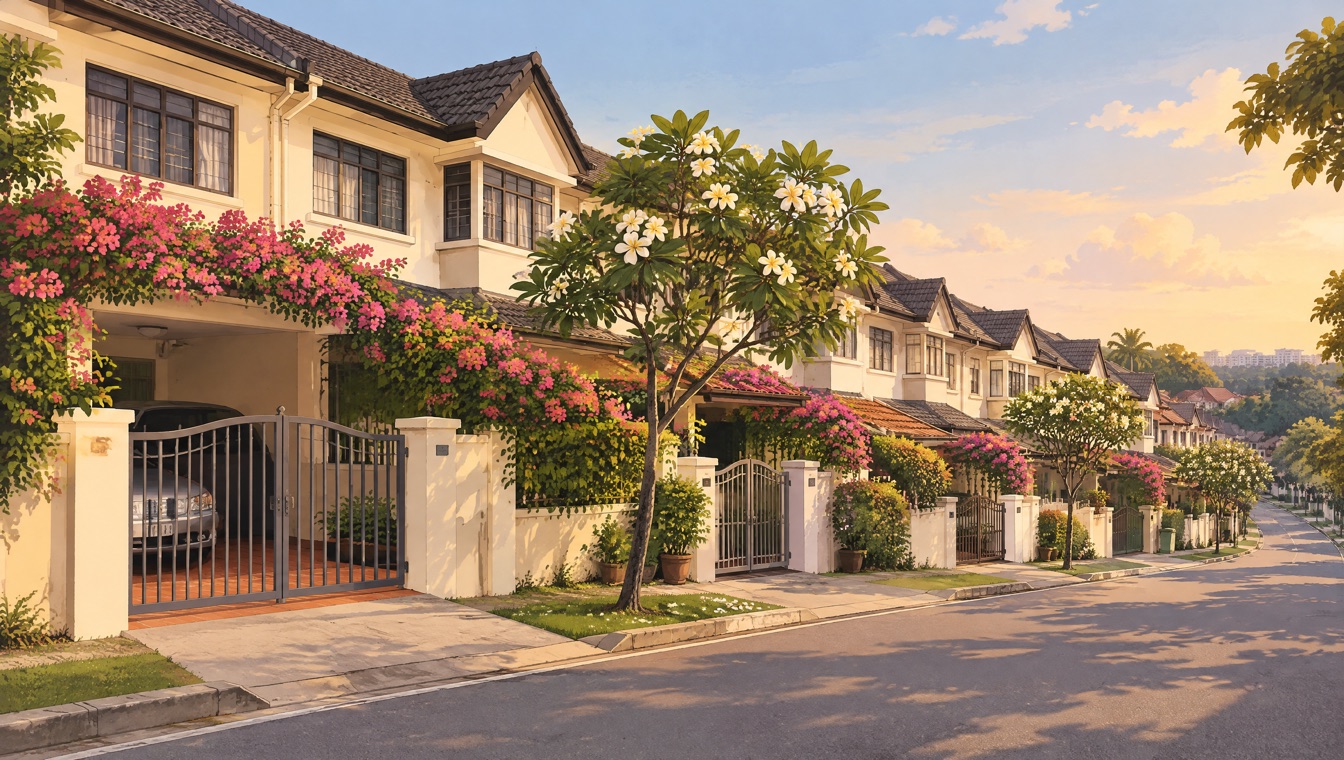
District 16 covers the landed estates of Bedok, Upper East Coast, Eastwood and Kew Drive.
We went through every landed sale in D16 from 1 Nov 2021 to 18 Nov 2026. That's 826 terrace, semi-detached and detached houses.
Landed homes come in two kinds, and we've kept them apart.
- Houses on their own land. You own the plot your house stands on. 683 of the sales were these.
- Strata landed houses. The house sits in a shared development, with common grounds and facilities run by a management corporation, and owners pay maintenance fees. 135 of the sales were these. They have their own section.
Most of this article is about houses on their own land.
Houses on their own land
For 412 of them, the seller's purchase price is on record. 407 of those sellers made a profit. The typical seller's price rose 97.7%, over a typical hold of 14.4 years. About half sold for at least double what they paid.
These are gross gains. Agent fees, loan interest, stamp duty, renovation and any rebuilding all come out of them.
| Held for | Owners | Median gain | Median gain a year | Sold at a profit |
|---|---|---|---|---|
| Under 3 years | 17 | 68.5% | 23.2% | 88% |
| 3 to 6 years | 65 | 46.4% | 9.1% | 100% |
| 6 to 10 years | 46 | 47.2% | 5.2% | 98% |
| 10 to 20 years | 169 | 116.9% | 5.4% | 99% |
| 20 years or more | 115 | 181.8% | 4.2% | 100% |
A gain that size in under 3 years usually means the owner rebuilt the house and sold it new. Their gain includes what they spent on building.
5 sellers sold for less than they paid, and 2 of them had owned the house for under 3 years.
Against the market
From here on, we count owners who held at least 3 years. We also left out 12 owners whose record shows they rebuilt the house while they owned it. Their prices grew 7.6% a year, but part of that was the new building they paid for. That leaves 383 owners.
URA's landed price index rose 4.6% a year over the same periods. The typical D16 owner made 5.2% a year, and 79% of them beat the index.
URA's index covers landed homes across Singapore, including the prime districts. So the typical D16 landed owner's price grew faster than landed prices island-wide.
Freehold against 99-year
More than a quarter of D16's sales of houses on their own land were on 99-year leases.
| Tenure | Owners | Median growth a year | Against the market | Beat the market |
|---|---|---|---|---|
| Freehold or 999 years | 235 | 5.9% | +1.8 points | 88% |
| 99 years | 148 | 4.1% | +0.4 points | 64% |
Freehold and 999-year houses grew nearly two points a year faster than 99-year ones. Both beat the market on average, the 99-year owners by only 0.4 points.
A 99-year lease gets shorter every year and a freehold title doesn't, so a buyer of an older 99-year house gets fewer years for the price.
Older houses grew faster
| House built | Owners | Median growth a year | Against the market | Beat the market |
|---|---|---|---|---|
| Before 1990 | 50 | 6.1% | +1.9 points | 88% |
| 1990s | 222 | 5.1% | +0.8 points | 77% |
| 2000 or later | 26 | 4.6% | +0.8 points | 65% |
| Not in the record | 85 | 5.8% | +1.9 points | 80% |
Most D16 houses in the comparison were built in the 1990s. There were too few built after 2000 to split by decade, so we've put them together.
Every group beat the market, but the older the house, the faster its price grew. With an old house, most of the price is the land, and land kept rising. With a newer house, a bigger part of the price is the building, and a building wears with age.
That doesn't make the newer house the worse buy. Older-house owners usually spend on repairs, A&A works or a full rebuild, and none of that shows in these figures. Owners of newer houses moved in without hiring a contractor, applying for permits or moving out while the work was done.
The records leave out the build year for many older houses. Some of those owners may have rebuilt without the record showing it, so their gain would include the rebuild.
House type
| Type | Owners | Median growth a year | Against the market | Beat the market |
|---|---|---|---|---|
| Terrace House | 239 | 5.4% | +1.4 points | 84% |
| Semi-Detached House | 118 | 4.8% | +0.8 points | 76% |
| Detached House | 26 | 3.6% | −0.6 points | 38% |
Terraces grew fastest. Detached houses grew slowest, and the typical detached owner was a little behind the index. Only 26 detached owners are in the comparison, so read that one with care.
D16 estates ranked by price growth
We ranked the 17 estates with at least 5 owners in the comparison, by their typical owner's growth a year. D16 has many single houses outside a named estate, so the list is short. Here is all of it, fastest first.
Most estates have only a handful of sales here, and owners held over different years. So a gap of a few tenths of a point between two estates means little.
| Estate | Main street | Owners | Median growth a year | Tenure | Built |
|---|---|---|---|---|---|
| Sunbird Park | Sunbird Road | 8 | 7.1% | Freehold | 1992 |
| Lucky Hill | Bedok Terrace | 6 | 7.0% | 999 years | 1986 |
| Mera Terrace | Seagull Walk | 13 | 6.8% | Freehold | 1996 |
| Picardy Gardens | Jalan Pari Burong | 5 | 6.6% | Freehold | 1975 |
| Excelsior Gardens | Minaret Walk | 5 | 6.5% | Freehold | 1991 |
| Spring Park Estate | Jalan Remis | 6 | 6.4% | Freehold | 2002 |
| Harvey View | Harvey Crescent | 6 | 6.1% | Freehold | 1991 |
| Peakview Estate | Jalan Pari Kikis | 12 | 6.0% | Freehold | 1979 |
| Mistral Park | Jalan Angin Laut | 7 | 5.3% | Freehold | 1994 |
| East Coast Hill | Sennett Avenue | 7 | 5.2% | Freehold | 1983 |
| Bedok Ria | Bedok Ria Crescent | 9 | 5.0% | Freehold | 1990 |
| East View Garden | Jalan Pergam | 13 | 4.6% | Freehold | 1993 |
| Kew Vale | Kew Crescent | 29 | 4.6% | 99 years | 1996 |
| Tanah Merah Green | Tanah Merah Kechil Rise | 8 | 4.6% | 99 years | 1999 |
| Siew Lim Park | Bedok Road | 7 | 4.2% | 99 years | 1995 |
| Limau Villas | Limau Rise | 13 | 4.1% | 99 years | 1998 |
| Eastwood Park | Eastwood Way | 6 | 3.4% | 99 years | 1997 |
Not one owner in any of these 17 estates sold at a loss.
The top eight are all on freehold or 999-year land, and seven of them are terrace estates. The five estates on 99-year leases are all among the six slowest.
Kew Vale, the 99-year estate with the most owners in the comparison, made 4.6% a year.
Strata landed houses
A strata landed house is a terrace, semi-detached or detached house in a shared development. Owners share the grounds and facilities, a management corporation runs them, and owners pay maintenance fees.
We found 135 strata landed sales in D16, across 13 developments. For 130 of them, the purchase price is on record, and 126 of those sellers made a profit. The typical gain was 54.9%, over a typical hold of 12.2 years.
129 owners held at least 3 years. Their prices grew 4.2% a year, level with URA's landed index. 52% beat it.
Most D16 strata landed houses are older, and almost all are on 99-year leases. 112 of the 129 owners bought a house built in the 1990s or 2000s, and 123 of the 129 houses are 99-year.
These are the 7 developments with at least 5 owners in the comparison.
| Development | Main street | Owners | Median growth a year | Tenure | Built |
|---|---|---|---|---|---|
| Kew Gate | Limau Garden | 10 | 6.3% | 99 years | 1996 |
| The Springfield | Chempaka Kuning Link | 27 | 5.3% | 99 years | 1999 |
| Kew Residencia | Kew Crescent | 11 | 4.6% | 99 years | 1996 |
| D'Manor | Tanah Merah Kechil Avenue | 41 | 4.2% | 99 years | 2000 |
| Summer Gardens | Upper Changi Road East | 18 | 4.2% | 99 years | 1999 |
| Eco | Bedok South Avenue 3 | 7 | 1.7% | 99 years | 2017 |
| Archipelago | Bedok Reservoir Road | 9 | 0.1% | 99 years | 2015 |
The two newest, Eco and Archipelago, grew slowest. Most of their owners bought new or nearly new, and all 3 strata owners who sold at a loss were in these two. Like owners of newer houses on their own land, these owners moved in without a rebuild, and they get the shared facilities.
Five of these seven developments have fewer than 20 owners in the comparison, so one development's figure can swing on things the records don't show. A rebuild next door that runs longer than planned, for example, can weigh on prices for a while. Treat any one development's figure as a guide, not a verdict.
Eco and Archipelago are different from the other five. Each is a condominium with strata houses among its apartments: URA's records show 195 apartment sales at Eco and 124 at Archipelago in the past five years. The other five have houses only.
That matters if you aren't a Singapore citizen. SLA requires a foreign person, including a permanent resident, to get its approval for a strata landed house "which is not within an approved condominium development under the Planning Act (eg. townhouse or cluster house)". A strata landed house in an approved condominium development needs no approval. Ask your lawyer to confirm a development's status before you rely on it.
The figures are set against URA's landed index, because there is no separate index for strata landed homes.
New landed homes in D16
Developers sold only 7 new landed homes in D16 over the five years, all on their own land. So almost every landed buyer here bought a resale.
If you're choosing between an older house and a rebuilt or newer one nearby, add up both. Take the older house's price plus what you'd spend on it, and set that against the newer house's price. We can put the two next to recent resales on the same streets.
Things to weigh
- Check the tenure first. In D16, a freehold house and a 99-year house can sit a few streets apart. The lease is in the title. On a 99-year house, check how many years are left, not just the tenure.
- Older houses usually need work. If you buy one, budget for repairs, A&A works or a rebuild. Our landed checklist covers what to check before you buy.
- Who can buy. A foreign person, including a permanent resident, needs SLA's approval to buy a landed house. SLA makes an exception for a strata landed house in an approved condominium development. Of the developments above, only Eco and Archipelago are condominiums. The checklist explains how that works.
In short
- 407 of 412 sellers of D16 houses on their own land made a profit. The typical gain was 97.7%, before costs.
- 79% of owners who held at least 3 years beat URA's landed index.
- Freehold and 999-year houses grew 5.9% a year, against 4.1% for 99-year ones. The five 99-year estates were among the six slowest.
- The fastest estates were freehold or 999-year terrace estates: Sunbird Park, Lucky Hill, Mera Terrace, Picardy Gardens and Excelsior Gardens.
- Strata landed houses grew 4.2% a year, level with the index. Most are older developments on 99-year leases.
How we did it
We used URA caveat records for District 16 landed homes, from ERA's transaction export on 26 Nov 2026. It covers 826 sales from 1 Nov 2021 to 18 Nov 2026. That's under the export's 2,000-row cap, so nothing in that period was cut off.
The export doesn't say whether a house is on its own land or strata. URA's own transaction records do. We matched each sale to URA's record of the same month and price. No development had both kinds. 8 sales, all single houses, had no match and are left out of both groups.
We kept resales and sub-sales with a purchase on record. The gain is the sale price against the purchase price, before any costs.
For the market comparison, we kept owners who held at least 3 years. We left out the 12 whose record shows a rebuild: the house was completed after they bought it, in an estate with houses at least 10 years older. Buyers who bought a new development before completion stayed in.
For each sale, we took URA's landed price index in the quarter the owner bought and the quarter they sold. URA doesn't publish a landed index for each region, so this is the island-wide one. The owner's yearly growth minus the index's yearly growth shows how far ahead or behind they were. We only set a group against the index when it had at least 20 owners.
An estate is the project name URA records. An estate needed at least 5 owners in the comparison to be ranked. That's a small number, so treat any one estate's figure as a guide. The main street is the street most of its sales were on.
"Built" is the completion year in the record. For older estates, it's often missing, or it's the year a house was rebuilt.
A few things to keep in mind:
- We only see owners who sold in these five years.
- The records don't show the house's condition, or what the owner spent on it.
- They also don't show how many years were left on a 99-year lease when the owner bought.
This looks at past sales. It doesn't predict future prices and isn't financial advice.
Common questions
Which landed estate in D16 grew the fastest?
Among houses on their own land, Sunbird Park, on Sunbird Road, grew fastest. Its owners made 7.1% a year. Lucky Hill and Mera Terrace were close behind, at 7.0% and 6.8%.
Do landed owners in D16 make money?
Almost all of them did. 407 of 412 sellers of houses on their own land made a profit, and none of the owners in the 17 ranked estates sold at a loss.
Does freehold landed grow faster than 99-year landed in D16?
Yes, by nearly two points a year. Freehold and 999-year owners made 5.9% a year, against 4.1% for 99-year owners.
How did strata landed houses do in D16?
Their owners made 4.2% a year, level with URA's landed index. Most are developments from the 1990s and 2000s on 99-year leases. The two newest grew slowest.
Thinking of buying or selling landed in D16?
Tell us the estates you're looking at. We'll go through the recent sales with you, and what owners there made.
Records from URA caveats, run on 26 Nov 2026.